

- HOME
- Research
- Research Category
- Energy System Sugiyama Laboratory
Energy System
Sugiyama Laboratory
Renewable energy system by interdisciplinary approach between electronics and chemistry
High-efficiency photovoltaics for green hydrogen production
To achieve carbon neutrality, CO2-free hydrogen is indispensable. Disruptive installation of photovoltaic is expected as a power source to produce green hydrogen in the regions with high irradiance. For this purpose, there is a growing expectation for high efficiency solar cells, far superior to conventional silicon solar cells. The key to achieving high efficiency lies in semiconductor nanocrystal technology. We are conducting research and development rooted in material chemistry and physics, from crystal growth to system evaluation of solar cells.
Physics of photocatalysts for producing hydrogen from sunlight and water
Photocatalysis is expected to be the ultimate technology for low-cost solar hydrogen production. In order to improve the efficiency of photocatalysts, it is essential to investigate the band structure of the interface between water and the semiconductor, which is responsible for the generation of photovoltaic power, and to design a structure that can learn from high-efficiency solar cells. We are simultaneously developing new analytical methods and exploring highly efficient photocatalysts.
A system to produce green chemicals from CO2
Many industrial processes involve CO2 emissions, and there is growing expectation for systems that convert captured CO2 into green chemicals by reducing it using renewable energy. Leveraging knowledge from fuel cells and water electrolysis technologies, we are developing an electrolysis system that efficiently produces valuable chemicals such as ethylene and ethanol from CO2.
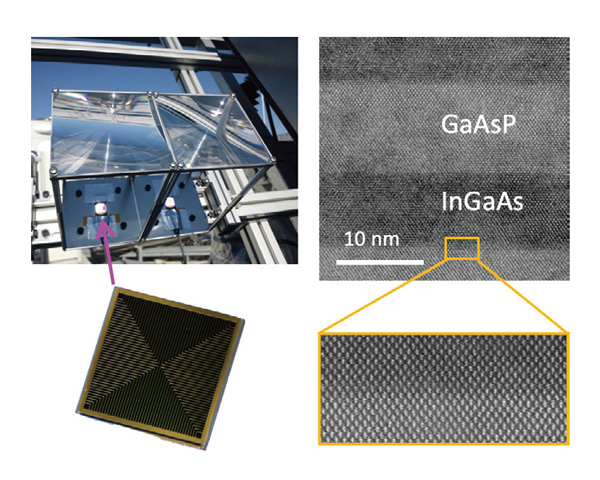
High-efficiency solar cells with nano-epitaxial structures
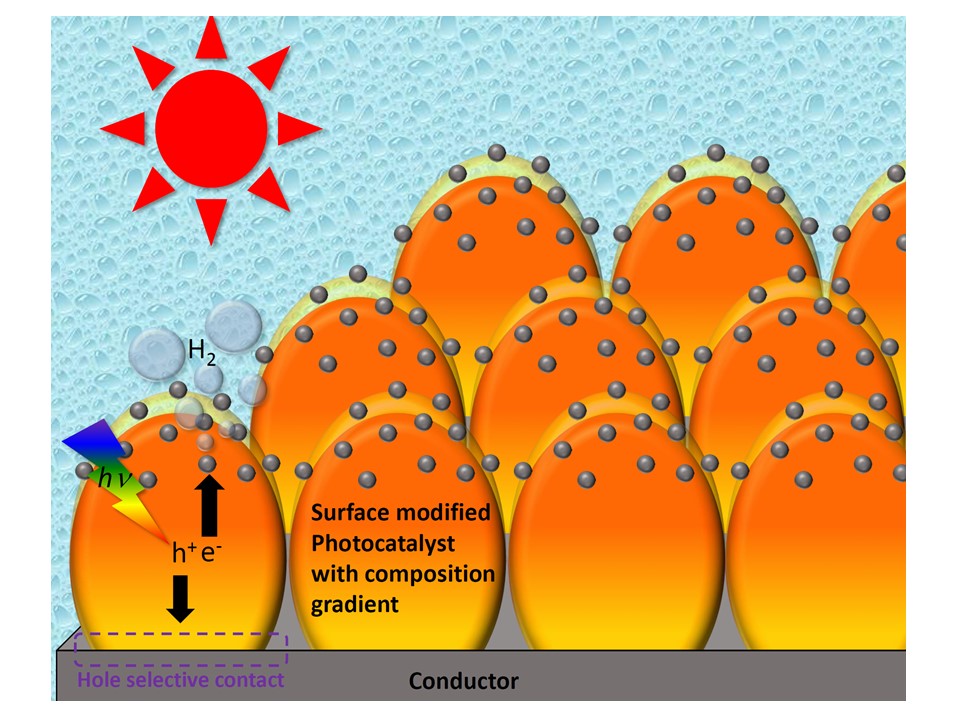
Photocatalysts for H2 production with high-efficiency PV structure
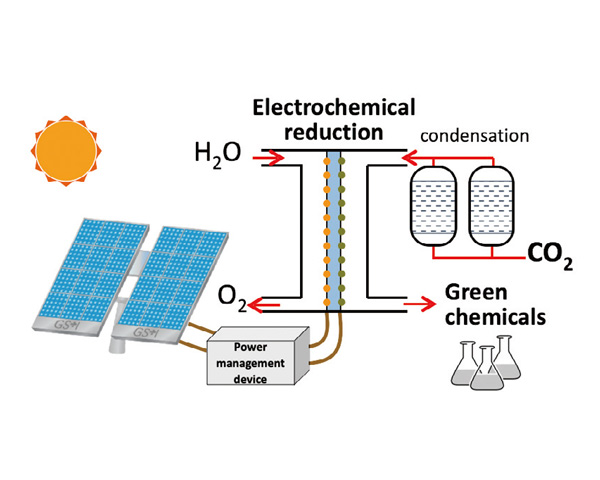
An electrochemical system for producing green chemicals from CO2
Are fossil fuels biofuels?
The answer is “correct.” Chemically speaking, both are hydrocarbons produced from water and CO₂ in the atmosphere. So why are fossil fuels considered the main culprits of global warming, while biofuels are seen as a promising sustainable fuel? The difference lies in the time it took to capture and store carbon as fuel versus the time it takes to release that carbon as CO₂ when the fuel is used (burned). The problem is that we use up fossil fuels—which took millions of years to form—in an instant. However, plants also grow quite slowly. We compensate for this slow growth by cultivating plants on a massive scale. Therefore, if we were to cover all the energy we use in a single day with biofuels, we would need an enormous amount of land for cultivation. Is there a way to produce fuel from sunlight using much less land? The answer lies in green hydrogen production and carbon recycling powered by solar energy. Our challenge is to turn the sustainable fuels made possible by science into a practical solution.
Member

-
- Professor
Masakazu SUGIYAMA
Research Area: Photovoltaic technology, energy system, carbon recycling - Professor
Laboratory Homepage
Tags
