

- HOME
- Research
- Research Category
- Division of Global Security and Energy Transition (Renewable Energy System (Wind/Wave Energy))Iida Laboratory
Division of Global Security and Energy Transition (Renewable Energy System (Wind/Wave Energy))Iida Laboratory
Sustainable renewable energy system development with local co-creation
Against the backdrop of global instability, there is a need to establish renewable energy systems— which are domestically produced—from the perspective of energy security.
Wind power is a renewable energy system capable of generating electricity on a large scale, and are sustainable energy systems that operate in a natural environment. Considering the future energy system of our resource-poor country, it is a very important issue to develop and establish renewable energy systems that use natural energy, which is renewable energy, to achieve carbon neutrality. However, there are many challenges to developing optimal energy systems in natural environments, and operating in a natural environment means that it is important to understand the complexity, uncertainty and diversity of nature and how to reflect this in design and operation.
In particular, the natural wind and waves that provide the energy source for wind and wave power generation are influenced by atmospheric conditions and topographical features such as cyclones and typhoons. This influence produces flow phenomena with a complex spectrum, and there are issues such as failure problems that result from this. In addition, social acceptance issues such as noise and bird collision problems are increasing as wind power is introduced on a large scale. In addition, research and development of large-scale offshore wind power systems has been carried out in recent years.
The laboratory aims to solve various scientific and social problems and develop practical wind and wave power generation systems and other renewable energies based on the elucidation of physical phenomena using large-scale numerical simulation technology and large-scale data analysis technology (e.g. machine learning technology).Furthermore, our laboratory is promoting technological development aimed at the design and research of next-generation, advanced floating offshore wind power generation systems; through the integration of digital transformation (DX) technologies and the introduction of advanced maintenance techniques, we are striving to build low-cost, highly reliable energy systems.
The main research and development activities are as follows
- (1)Development of optimal wind power generation systems based on numerical fluid dynamics.
- (2)Research and development of wind power intelligent maintenance and digital twin technology.
- (3)Research and development of environmentally symbiotic wind power generation system technology.
- (4)Research and Development of band-new Floating Offshore Wind Power Generation Systems
- (5)Development of nature-symbiotic wave power generation systems
- (6)Research and development of social application creation in advanced domain meteorological reanalysis
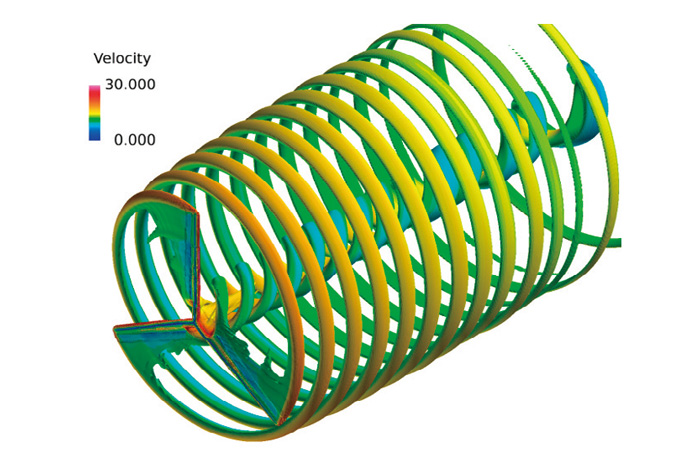
Computational flow simulation around the wind turbine
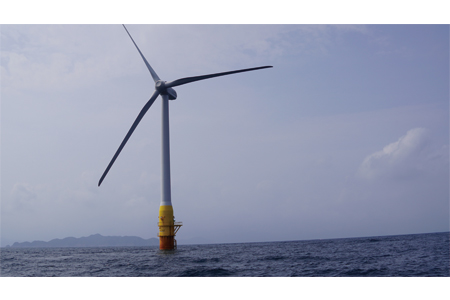
Floating Offshore Wind Power Generation System off the Coast of Goto, Nagasaki Prefecture
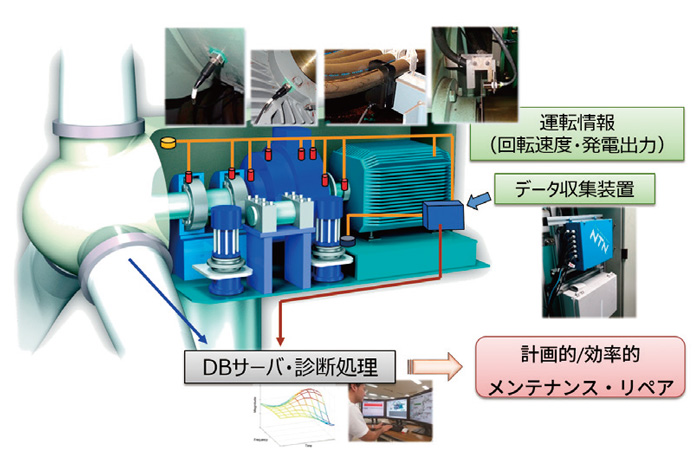
Wind power SMART MAINTENANCE technology research and development
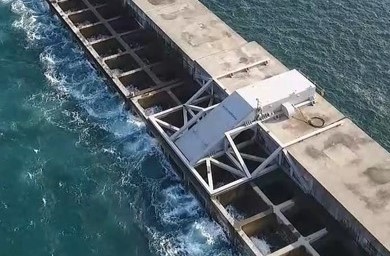
Wave power generation systems through co-creation with local companies.
What is interesting about wind turbines as a study or discipline? When I talk to children, they sometimes ask me questions like that. What I find interesting about wind power is that as a renewable energy system it is earth friendly and important for creating a sustainable social system, but perhaps it is also about creating a system that works in harmony with nature. In the natural environment, we strive for harmony with the wind environment, the ecosystem and the people who live there, and this is where new research and development and connections are born. The flow around wind turbines is full of fluid engineering environments that humans have been involved with, from the flow that people feel, to bicycles, cars, trains, bullet trains, etc., and it is also connected to various academic fields such as mechanical engineering, electrical engineering, civil engineering, environmental studies, meteorology, sociology, economics, international politics, etc. It requires a lot of challenges and initiatives, but we hope that this will be the food for the Earth in 100 years. We carry out research and development with the aim of making the world a better place 100 years from now.
Member

-
- Project Associate Professor
Makoto IIDA
Research Area: Wind power tech, Wave power tech, Fluid engineering, Weather information utilisation tech, DX Basic technology for Renewable energy (sensoring, analytical technology, data platform development) - Project Associate Professor
<As of July 2026>
Tags
