

- HOME
- Research
- Research Category
- Advanced Art DesignKondo Kaoru Laboratory
Advanced Art Design
Kondo Kaoru Laboratory
Exploring a new relationship between humanity and the world from a nature-centered perspective: the interplay of art and academia, and the cultivation of the next generation
Shifting the Perspective to a Nature-Centered View
While modern society has achieved unprecedented affluence and convenience through rapid advancements in science and technology, it also faces numerous challenges—including environmental issues, social fragmentation, and spiritual isolation. Underlying these challenges are fundamental questions regarding the relationships between humanity and nature, and between science and technology and society.
What is required today is a shift in perspective: moving away from a human-centric worldview toward a nature-centered one that views humanity as an integral part of nature. In recent years, attention has focused not only on artificial intelligence but also on the intelligence possessed by living organisms and the diverse information-processing systems found in the natural world. Reconceptualizing intelligence—viewing it not as something unique to humans but as something that exists widely throughout nature—also contributes to this shift toward a nature-centered perspective.
We do not exist outside of nature; rather, we are sustained within the web of relationships that constitute it. Humans perceive the world, recognize parts of it, and assign meaning to them while forging relationships with others and with nature. These relationships, in turn, give rise to new forms of perception. We believe that this "cycle of perception, recognition, and relationship" is the fundamental process by which humans live as part of nature, and that it forms the foundation of a nature-centered approach.
Art as a Catalyst for the Cycle of Perception, Recognition, and Relationship
Art plays a vital role in fostering this "cycle of perception, recognition, and relationship" within society. Art represents the traces of our contact with a world that—because we are finite beings—we can never fully comprehend. It reconnects a world fragmented by analysis and the drive for efficiency, offering an opportunity to re-examine the relationships between humanity and nature, self and other, and science and technology and society.
In today’s world, where science and technology—including AI—are advancing rapidly, the tasks of acquiring knowledge and processing information are increasingly being shared among diverse intelligent systems, encompassing not only humans but also artificial intelligence and biological intelligence. Precisely because we live in such times, we must continue to ask ourselves not only "what we know," but also "what we feel" and "with whom and in what kind of relationships we live." Art is an endeavor that allows us to perceive aspects of the world that cannot be captured by cognition alone, continually opening up the relationship between humanity and the world.
Expanding the Horizons of Knowledge at the University
Universities must be places that constantly question the very nature of knowledge. While academic research serves as a vital foundation for modern society, the world we inhabit also encompasses experiences and relationships that cannot be fully grasped through mere numbers or concepts.
Academia and art are not in conflict; rather, they are complementary endeavors that constitute human knowledge. By moving back and forth between academic and artistic inquiry, we aim to expand the university beyond a mere site of knowledge production into a space for exploring new relationships between humanity and the world, thereby striving for the "social implementation of art."
Furthermore, by connecting diverse forms of knowledge across disciplines, we aim to cultivate individuals who can explore new relationships—between humanity and nature, and between science/technology and society—from a nature-centered perspective; who can relearn what it means to live as part of nature; and who can create an inclusive and sustainable future.
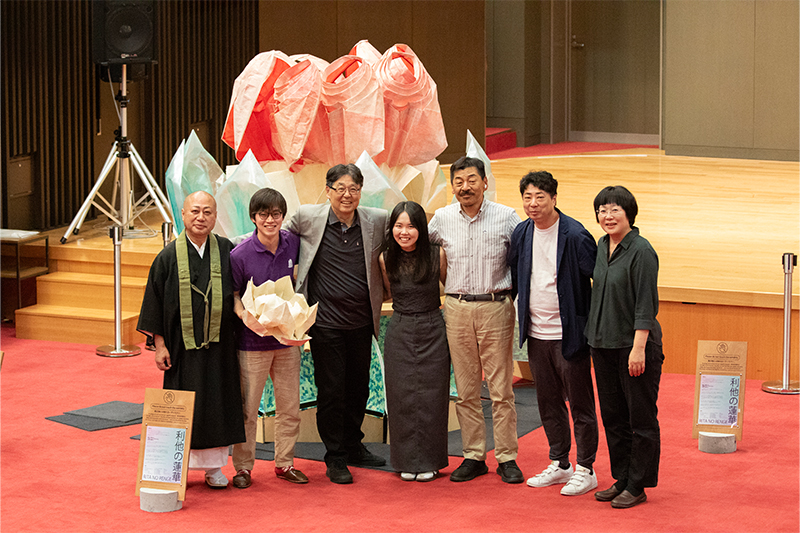
Koyasan Conference "RITA NO RENGE"
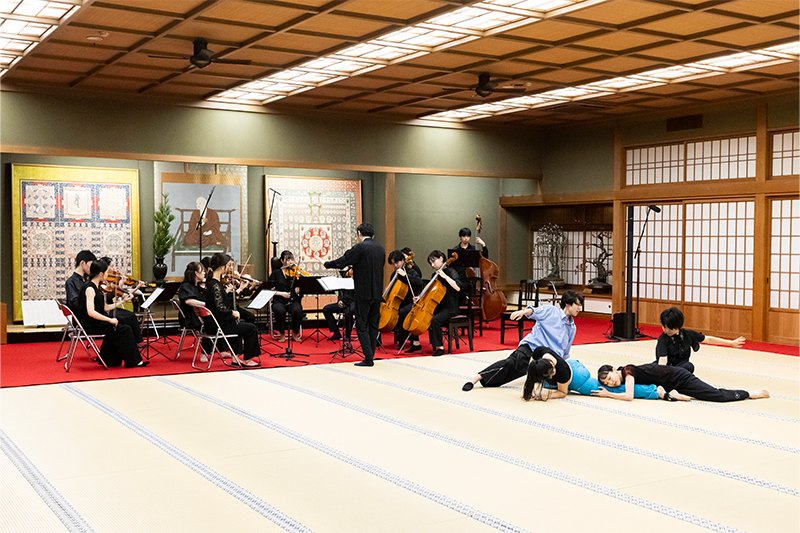
Youth Koyasan Conference
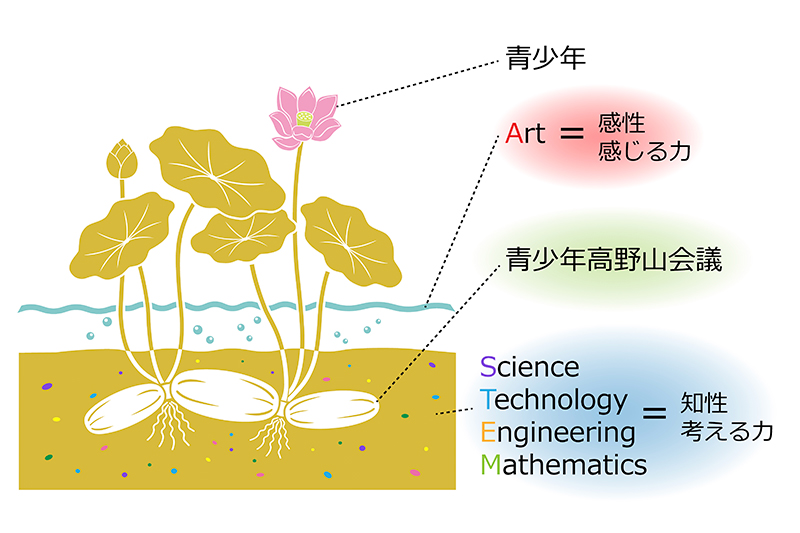
Diagram of the "Renge Model STEAM Education"
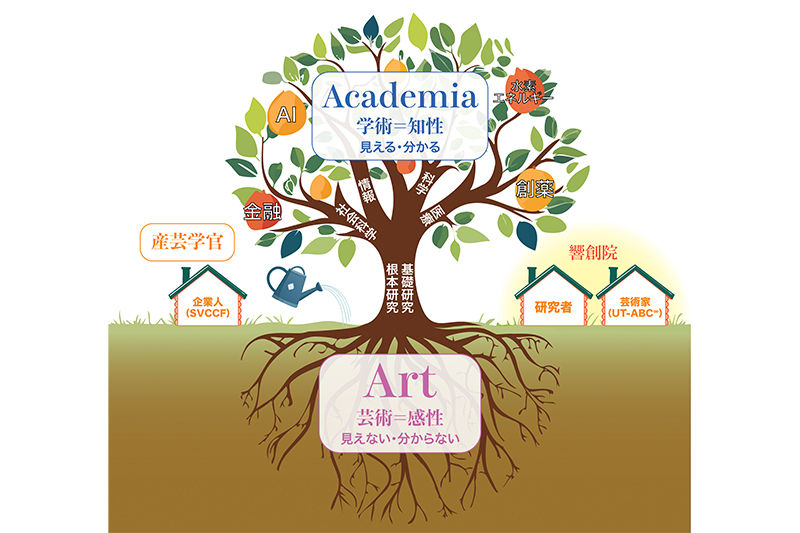
Diagram of "Art Environment Creation," aiming for the social implementation of art.
The Koyasan Conference, hosted by the Research Center for Advanced Science and Technology and organized by the Advanced Art Design division, is a highly distinctive forum that brings together not only members of RCAST, but also local communities primarily from Wakayama Prefecture, as well as stakeholders from industry, the arts, academia, and government. It is a rare opportunity for participants across generations, sectors, and positions to engage in dialogue on shared questions concerning the future.
By traversing the diverse domains of science, art, and religion, the conference offers a place for examining the future of society from multiple perspectives, discovering and generating new forms of value, and fostering co-creation and intellectual integration.
The Youth Koyasan Conference, designed to nurture the next generation who will carry this initiative forward, implements the original educational approach known as the “Lotus Model of STEAM Education.” Through this program, participants cultivate a spirit grounded in both self-benefit and benefit for others.
Immersed in the history of Koyasan, which spans more than 1,200 years since its founding, participants are invited to exchange ideas of imagination and creation toward the next 1,200 years. Through these discussions, the conference seeks to explore a Nature-Centered perspective for the future.
Member
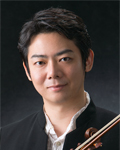
-
- Professor
Kaoru KONDO
- Professor
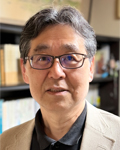
-
- Senior Research Fellow
Ryohei KANZAKI
- Senior Research Fellow
Laboratory Homepage
Tags
