

- HOME
- Research
- Research Category
- International Security StudiesYu Koizumi Laboratory
International Security Studies
Yu Koizumi Laboratory
What kind of world do we want to live in ?
My research focuses on international security, with a particular emphasis on Russia and the countries of the former Soviet Union.
I joined RCAST in 2019. Looking back, it was still a period in which large-scale conflicts were relatively rare. With growing attention being paid to emerging security challenges such as pandemics, climate change, and disinformation, the prospect of states waging large-scale war against one another over a period of years was not, it seems to me, taken very seriously.
That atmosphere changed decisively with Russia’s invasion of Ukraine in 2022. Large-scale interstate war, which had somehow come to be treated either as a relic of the past or as a remote possibility for the future, became a reality before our eyes. This development also forced Japan, facing China’s rapid military build-up and North Korea’s nuclear and missile programs, to fundamentally reassess its security outlook. The destabilization of the Middle East following the outbreak of the Gaza conflict in 2023, including the U.S. and Israeli attacks on Iran in 2026 and the blockade of the Strait of Hormuz, has also profoundly shaken the security environment of both Japan and the wider world.
Against this historical backdrop, the Division of International Security Studies seeks to develop a distinctive approach to security research. The first pillar of our work is to further advance our long-standing research on military policy in the countries of the former Soviet Union. The military capabilities of Russia and Ukraine have attracted significant attention as a result of the current war, yet this field remains insufficiently developed in Japan. By working with partners overseas, we aim to produce internationally competitive research from Japan.
The second pillar is to articulate a form of security research that can be pursued precisely because we are based in Japan. China and North Korea, as noted above, are now widely recognized as major security challenges, and both are located in Asia. Russia is often perceived as a distant country, yet its Far Eastern region lies immediately next to Japan. Owing to these geographical conditions, Japan has long maintained relations with China, the Korean Peninsula, and the Russian Far East, accumulating substantial knowledge and expertise. We hope to make the Division of International Security Studies a hub for research that draws on this accumulated knowledge and develops it further.
The third pillar of our work is the use of commercially available data, such as satellite imagery, and artificial intelligence in international security research. Tasks that were once possible only for national intelligence agencies can now be undertaken with far fewer resources. The spirit of the Division of International Security Studies is to take this new reality seriously and to ask: if such research is now possible, why not attempt it ourselves? We intend to continue pursuing such challenges in the years ahead.
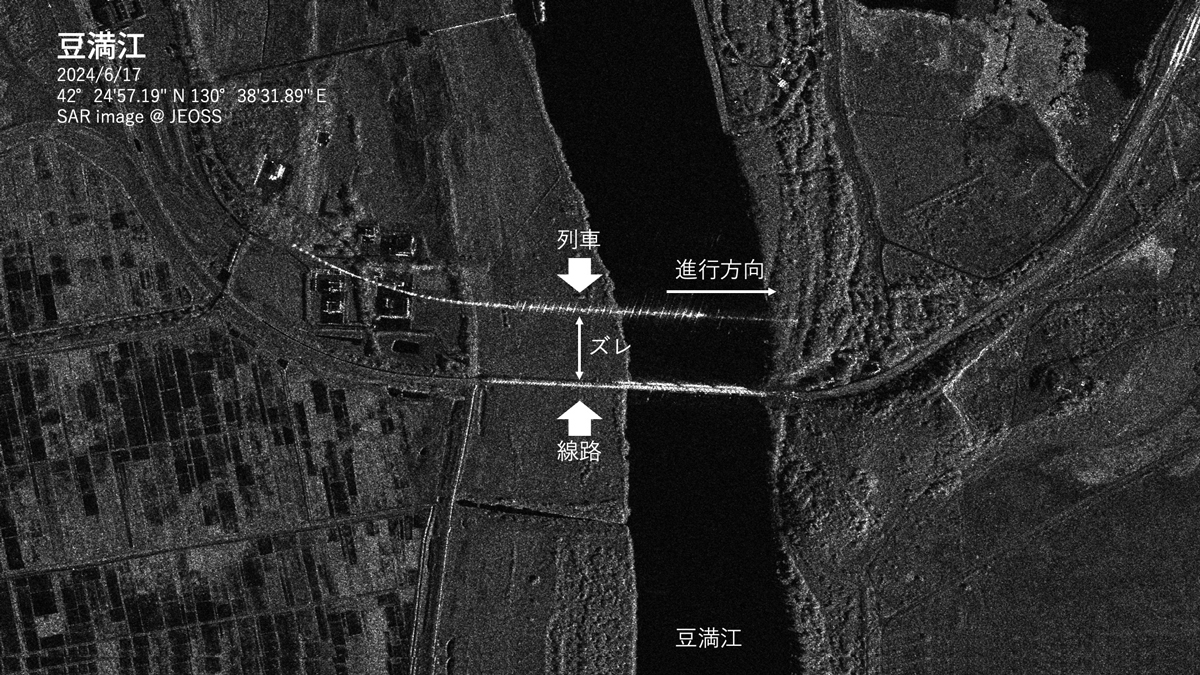
In November 2025, the government of the Russian Federation imposed an indefinite entry ban on me. In other words, I have been barred from entering the very object of my research.
This kind of worldly relationship with one’s object of study is, I think, one of the fascinating—and troublesome—aspects of research in the humanities. I doubt this sort of thing happens very often in the natural sciences. One does not usually hear of a researcher offending a virus, or of a supercomputer suddenly becoming distant and cold.
More broadly, the question of whether humanistic research, conducted as it inevitably is within such relationships, can properly be called a science has long been a matter of debate. Since the twentieth century, there have been continuous efforts to make the humanities more scientific, as well as arguments over whether they need to be scientific in the first place. One might call this the history of humanists asking themselves, “Who are we?”
I do not claim to have the ability to plunge deeply into these debates myself. What I would like to do, rather, is to explore ways of continuing research even when one’s object of study dislikes one—using tools such as satellite imagery along the way.
Member

-
- Associate Professor
Yu KOIZUMI
Research Area: International Security Studies, including Russia and the Former Soviet States - Associate Professor
<As of July 2026>
Tags
